Trying to choose between a waterfront home and a golf community home in Jupiter? You are not alone. For many buyers, this is one of the biggest lifestyle decisions in the local market because each option offers a very different day-to-day experience, cost structure, and ownership rhythm. If you are weighing boating and water views against club amenities and a more structured setting, this guide will help you compare the tradeoffs clearly. Let’s dive in.
Why Jupiter Makes This Choice Unique
Jupiter has a real mix of waterfront and golf-oriented communities, which is part of what makes the decision so personal. The town’s neighborhood map includes water-focused areas like Jupiter Yacht Club, Jupiter Harbour, Ocean Trail, Jupiter Inlet Cove, Mangrove Bay, and Yacht Club Estates, along with golf-centered communities such as Admirals Cove Golf Village, Jupiter Country Club, Loxahatchee Club, Bears Club, and Trump National.
That range means you are often choosing between two distinct ways of living. In some cases, communities blend both boating and golf, but many buyers still end up deciding whether they want water access to shape their lifestyle or whether they want club amenities to do that instead.
Waterfront Homes in Jupiter
What waterfront living feels like
If you picture your ideal South Florida lifestyle around boating, marina access, inlet proximity, and long water views, waterfront living may feel like the natural fit. Jupiter’s Riverwalk follows the Intracoastal and connects residential areas with marinas, parks, restaurants, and gathering spaces, which reinforces that water-first atmosphere.
The Jupiter Inlet is especially important to the local lifestyle. The Town describes it as the meeting point of the Loxahatchee River, the Intracoastal Waterway, and the Atlantic Ocean, and a hub for commercial fishing, charter fishing and diving, pleasure boating, and sport fishing. If you want your weekends and downtime to revolve around the water, that setting can be hard to replicate in a golf-focused community.
Do not assume all water access is the same
One of the biggest mistakes buyers make is assuming every waterfront address comes with the same rights or convenience. In Jupiter, water access can vary widely depending on the property and community.
The town lists public boating facilities at Waterway Park and Burt Reynolds Park, and it notes public docks at the Jupiter Yacht Club marina basin. The beaches page also explains that some dune crossovers are town-operated, some are county-operated, and some are private. In simple terms, a home near the water is not always the same as a home with private dock access, deeded slip rights, or direct beach access.
Waterfront upkeep can be more complex
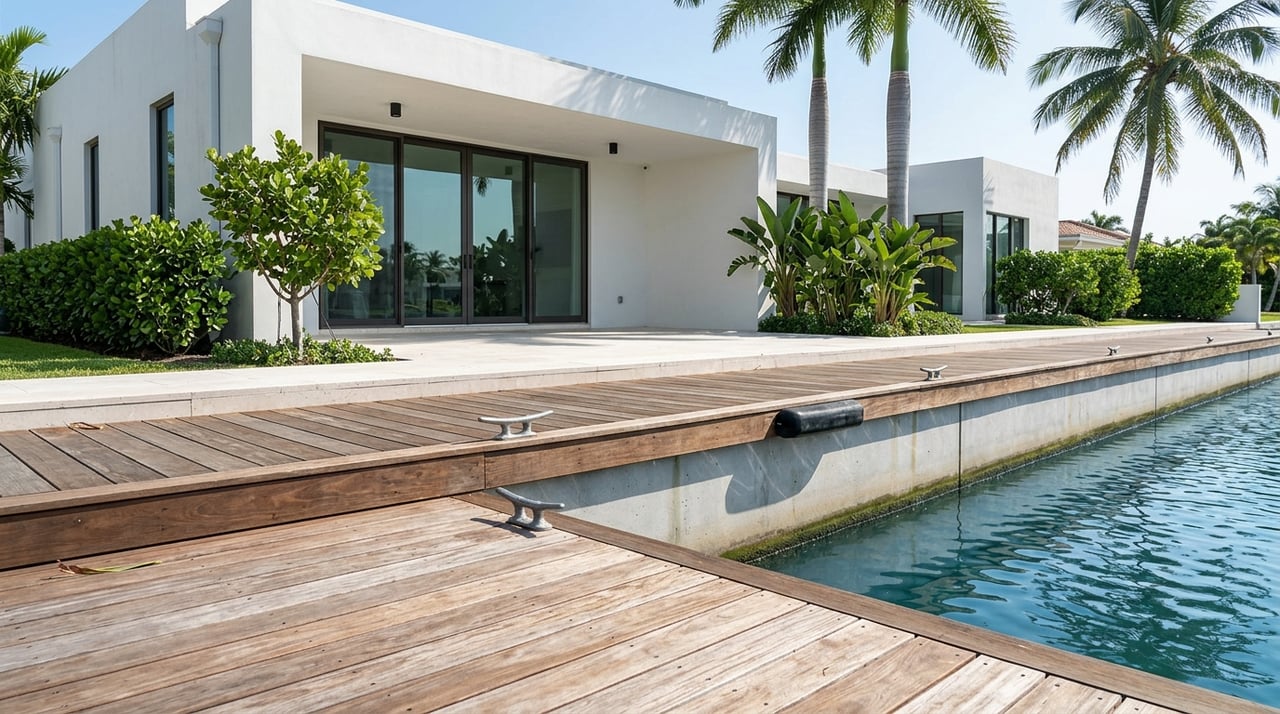
Waterfront ownership often comes with responsibilities that inland or club-centered homes may not. Depending on the property, you may need to think about docks, slips, seawalls or bulkheads, marina rules, and landscaping that can handle salt exposure.
UF/IFAS notes that salt spray can dry out foliage and that coastal landscapes need salt-tolerant plant choices. It also notes that mangrove growth can affect shoreline views and may trigger trimming rules. That matters if your goal is to preserve both function and appearance over time.
Flood risk and insurance matter early
For waterfront buyers in Jupiter, flood due diligence should happen at the beginning of the search, not at the end. Palm Beach County says coastal areas are susceptible to storm-surge flooding and king tides, and it recommends serious consideration of flood insurance even when it is not required.
The county also notes that new flood insurance policies take 30 days to become effective. FEMA identifies Special Flood Hazard Areas as the one-percent-annual-chance floodplain and includes coastal high-hazard zones such as VE and AE. That means flood zone, elevation, and insurance timing should all be part of your early review when comparing waterfront options.
Permitting and shoreline rules can affect plans
If you are buying with improvement plans in mind, waterfront property may involve another layer of review. Florida DEP regulates construction and activities seaward of the Coastal Construction Control Line, and the state’s joint coastal permitting program covers coastal work that can affect erosion, dunes, submerged lands, and public access.
That does not mean every waterfront property is difficult. It does mean you should understand the site-specific rules before assuming you can change landscaping, modify shoreline features, or take on exterior projects without added process.
Golf Community Homes in Jupiter
What golf community living feels like
Golf communities in Jupiter tend to be more club-centered than view-centered. The daily experience often revolves around the clubhouse, racquet facilities, fitness spaces, dining, pools, and a calendar of activities rather than docks, inlets, or marina logistics.
For many buyers, that creates a more predictable and self-contained lifestyle. Jupiter Country Club highlights golf, dining, tennis, pickleball, bocce, fitness, swimming, and resort-style living. If you want your amenities organized in one place and your routine shaped by club access, this setting may feel easier to use consistently.
Membership structure is a major variable
Not every golf community works the same way, and that is where many comparisons get more nuanced. Jonathan’s Landing describes itself as a residential golf and boating community with optional golf club and marina memberships, while Admirals Cove combines a private marina, yacht club, golf associations, and a broad member amenity set within the gates.
Jupiter Country Club’s waitlist information shows limited waitlist spots for full or associate golf access while still allowing access to non-golf amenities during the wait. Jonathan’s Landing says all of its membership categories currently have a waitlist. So when you compare golf communities, you are not only comparing homes. You are also comparing optional versus structured membership, waitlists, dues, and any initiation-related costs.
Exterior rules may feel more defined
Golf communities often feel polished and carefully maintained, but that look may come with more oversight. In planned club settings, exterior choices can be shaped by association rules or restrictive covenants.
UF/IFAS notes that homeowners can follow Florida-Friendly landscape practices only when those practices are consistent with HOA requirements or restrictive covenants. If you like a very tailored, uniform environment, that may be a plus. If you want more freedom to make exterior changes, it is something to review closely.
Maintenance tradeoffs are different
Compared with waterfront ownership, golf community homes may involve fewer shoreline-specific concerns. You are typically less likely to be dealing with dock upkeep, salt-air exposure tied directly to the shoreline, seawall issues, or coastal permitting questions.
In exchange, you may take on club and association costs connected to the amenities that make the lifestyle appealing. For many full-time residents, that trade can be worth it because tennis, fitness, dining, and social programming are built into the community experience.
Waterfront vs Golf Community at a Glance
| Factor | Waterfront Home | Golf Community Home |
|---|---|---|
| Core lifestyle | Boating, water views, marina and inlet access | Club amenities, golf, racquets, fitness, dining |
| Access questions | Dock rights, slip access, public vs private access | Membership type, waitlists, amenity access |
| Typical upkeep | Docks, seawalls, salt-tolerant landscaping, shoreline concerns | HOA and club compliance, exterior standards |
| Key cost factors | Insurance, flood considerations, dock or seawall upkeep | Dues, waitlist costs, initiation-related expenses |
| Best fit for | Buyers who will actively use the water | Buyers who want structured amenities and club culture |
Hybrid Communities Can Blur the Line
In Jupiter, some communities combine boating and golf, which can make the decision less either-or than it first appears. Admirals Cove and Jonathan’s Landing are strong examples because they offer a broader lifestyle menu than a single-focus community.
That can widen appeal if you want flexibility or if your household has different priorities. It can also narrow the fit if the monthly carrying costs or membership structure feel too high for how often you would actually use both sides of the lifestyle.
How to Decide Which Fits You Better
Choose waterfront if daily water use is the priority
A waterfront home may be the better fit if you know you will regularly use a dock, boat access, marina services, or the inlet. It can also make sense if water views and proximity to the Intracoastal or ocean shape how you define value.
In that case, your search should focus on details like private versus shared access, shoreline obligations, flood zone, elevation, and any permitting or mangrove-related questions tied to the lot.
Choose golf community if amenities drive your routine
A golf community may be the better fit if you want convenience, recreation, and a built-in social environment without the extra complexity that can come with shoreline ownership. If tennis, fitness, dining, and a club setting are what you will use weekly, those features may deliver more practical value than a dock you rarely touch.
Your due diligence here should center on whether membership is optional, waitlisted, or tied to ownership, along with the full picture of dues and association obligations.
Ask what you will actually use
This is often the most helpful question of all. A beautiful waterfront home may lose some appeal if you do not plan to boat, while an amenity-rich golf community may feel expensive if you are unlikely to use the club regularly.
The clearest answer usually comes from matching lifestyle use with carrying cost and ownership complexity. When you look at the decision through that lens, your best fit often becomes much easier to see.
If you are comparing Jupiter waterfront properties, golf homes, or hybrid communities, working with a local advisor can help you sort through access rights, membership structure, carrying costs, and resale positioning in a much more practical way. For a personalized strategy tailored to your move, connect with Jamie Moody.
FAQs
How do Jupiter waterfront homes differ from golf community homes?
- Waterfront homes usually center on boating, water views, and shoreline access, while golf community homes usually center on club amenities like golf, dining, fitness, tennis, and pools.
What should you verify before buying a waterfront home in Jupiter?
- You should verify whether water access is private, shared, or nearby only, and review flood zone, elevation, insurance timing, dock or seawall obligations, and any coastal or mangrove-related limits.
What should you ask before buying in a Jupiter golf community?
- You should ask whether club membership is optional, required, or waitlisted, and review dues, initiation-related costs, amenity access, and HOA or covenant rules that may affect the property.
Are there communities in Jupiter that offer both boating and golf?
- Yes. Communities such as Admirals Cove and Jonathan’s Landing combine boating and golf features, but buyers should review membership structure and carrying costs carefully.
Is a waterfront home or golf home better for resale in Jupiter?
- Buyer appeal often depends on the lifestyle the property supports. Waterfront homes may attract buyers focused on boating and views, while golf homes may appeal more to buyers who want club amenities and a more structured community environment.