If you have ever driven through Coral Gables and wondered why the city feels so visually consistent, the answer is not accidental. Coral Gables was planned with a distinct architectural identity, and that design vision still shapes how homes and landmarks look today. If you are buying, owning, or updating a home here, understanding the main styles can help you better read the market and the property in front of you. Let’s dive in.
Why architecture matters in Coral Gables
In Coral Gables, architecture is more than curb appeal. The city describes Coral Gables Mediterranean Architecture as an expression of George Merrick’s original vision, and the Board of Architects still reviews design compatibility in areas like color, materials, fenestration, and proportion.
That means style has real meaning for you as a buyer or homeowner. It can affect how a home feels, how changes are reviewed, and how the property fits into the broader character of the city.
Mediterranean Revival: the signature style
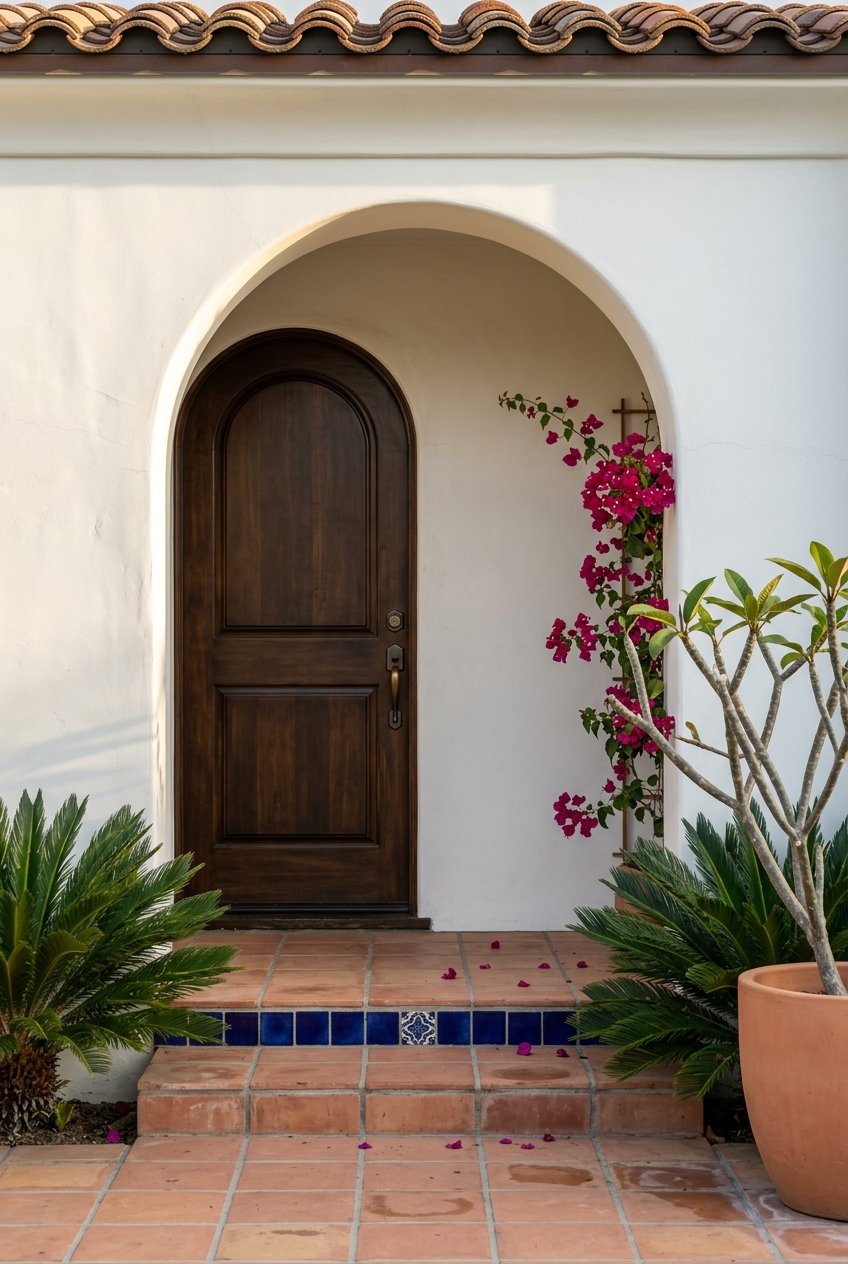
The architectural style most people associate with Coral Gables is Mediterranean Revival, often overlapping with Spanish Revival. According to the National Park Service, this style typically includes low-pitched clay-tile roofs, stucco exteriors, terra cotta details, arched windows, wrought-iron grilles, and multi-level plans.
In Coral Gables, this style is not just popular. It is foundational. It reflects the city’s original planning vision and helped create the old-world image that still defines many of its streets, civic spaces, and landmark buildings.
What Mediterranean Revival means
When you see a Mediterranean Revival home in Coral Gables, you are usually seeing a property that connects directly to the city’s design roots. The look is intentional, not just decorative.
It often signals a focus on texture, symmetry or balanced proportions, shaded outdoor spaces, and materials that work well in South Florida’s climate. In practical terms, it can also suggest long-term architectural relevance because the city continues to support this language through its Mediterranean design framework.
Landmark examples to know
Some of Coral Gables’ best-known landmarks show this style at its most recognizable. The city’s historical landmarks page highlights places like City Hall, Douglas Entrance, the Biltmore Hotel, the Venetian Pool, Cocoplum Woman’s Club, and Coral Gables Elementary.
These examples show the range of the style. City Hall uses Mediterranean Revival with native oolitic limestone, Douglas Entrance draws from old Spanish hill towns, and the Biltmore’s tower echoes Seville’s Giralda Bell Tower.
Old Spanish: a warmer residential expression
You will often hear people describe certain Coral Gables homes as “Old Spanish.” While the city more commonly uses terms like Mediterranean Revival, Spanish Revival, or Mediterranean Transitional, Old Spanish is best understood as a local shorthand for the more rustic and residential end of the same architectural family.
In other words, it is usually less about a separate official category and more about a particular feeling. These homes tend to feel more intimate, textured, and relaxed than the city’s grand civic buildings.
What Old Spanish homes tend to include
Coral Gables preservation materials point to recurring details such as coral rock and stucco walls, barrel-tile roofs, clay vents, carved or turned wood details, porches, loggias, and courtyard-like outdoor spaces. You can see this more domestic side of the city’s architecture in places like Merrick House, Coral Gables Elementary, and the Coral Gables Congregational Church, as noted in the city’s preservation guide.
For you as a buyer, this often translates to homes with stronger indoor-outdoor living, more shade, and more handcrafted visual texture. These properties may feel less formal than landmark-style Mediterranean homes, but they still share the same design DNA.
Why some homes feel formal and others feel rustic
This is one of the most common questions buyers have in Coral Gables. The short answer is that homes can belong to the same broader Mediterranean-Spanish family while expressing it very differently.
A grand façade, stronger symmetry, and more monumental detailing can make a home feel formal. More masonry texture, porch living, wood details, and courtyard elements can make it feel softer and more rustic. Both can be true to Coral Gables.
Contemporary and transitional styles
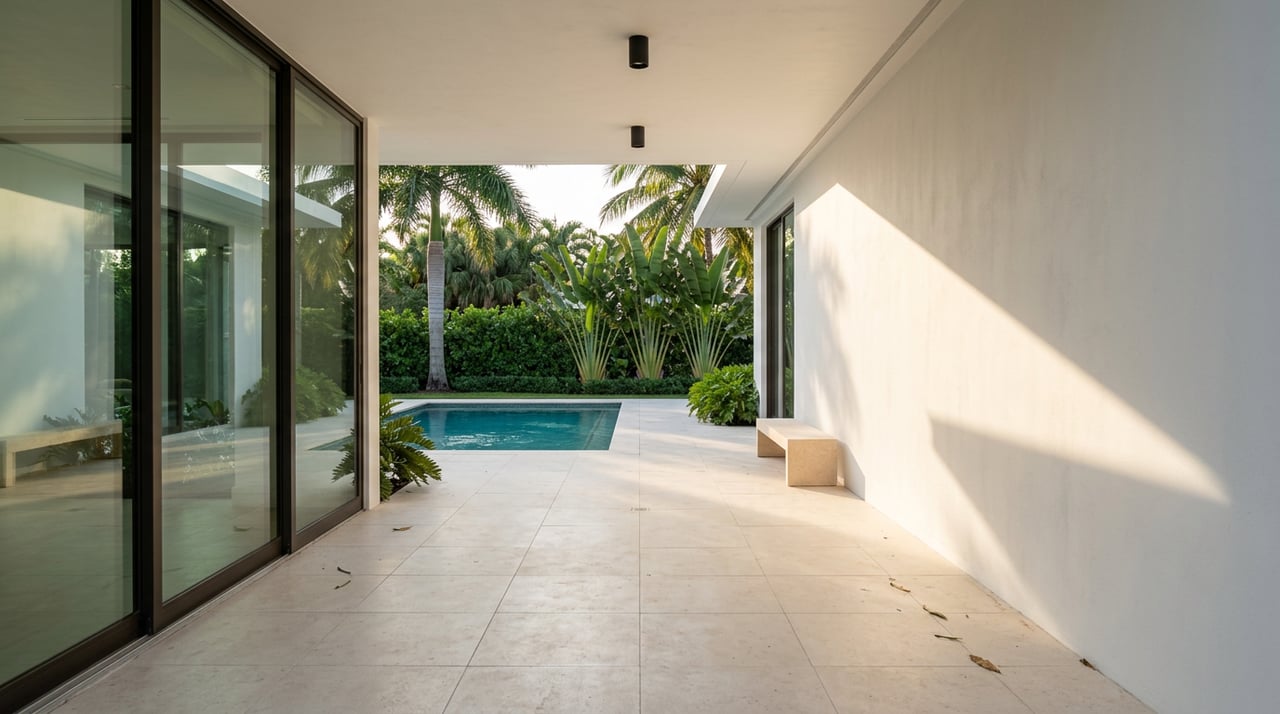
Coral Gables architecture did not stop evolving after the 1920s. Later buildings often kept the Mediterranean palette but simplified the ornament and adapted the style to newer design preferences.
The city’s history page for the Coral Gables Library describes the 1969 building as contemporary, yet it still includes quarried keystone, red clay roof tiles, Spanish clay floor tiles, wrought-iron light fixtures, Honduran mahogany doors, high ceilings, and exposed wood beams.
What Mediterranean Transitional means
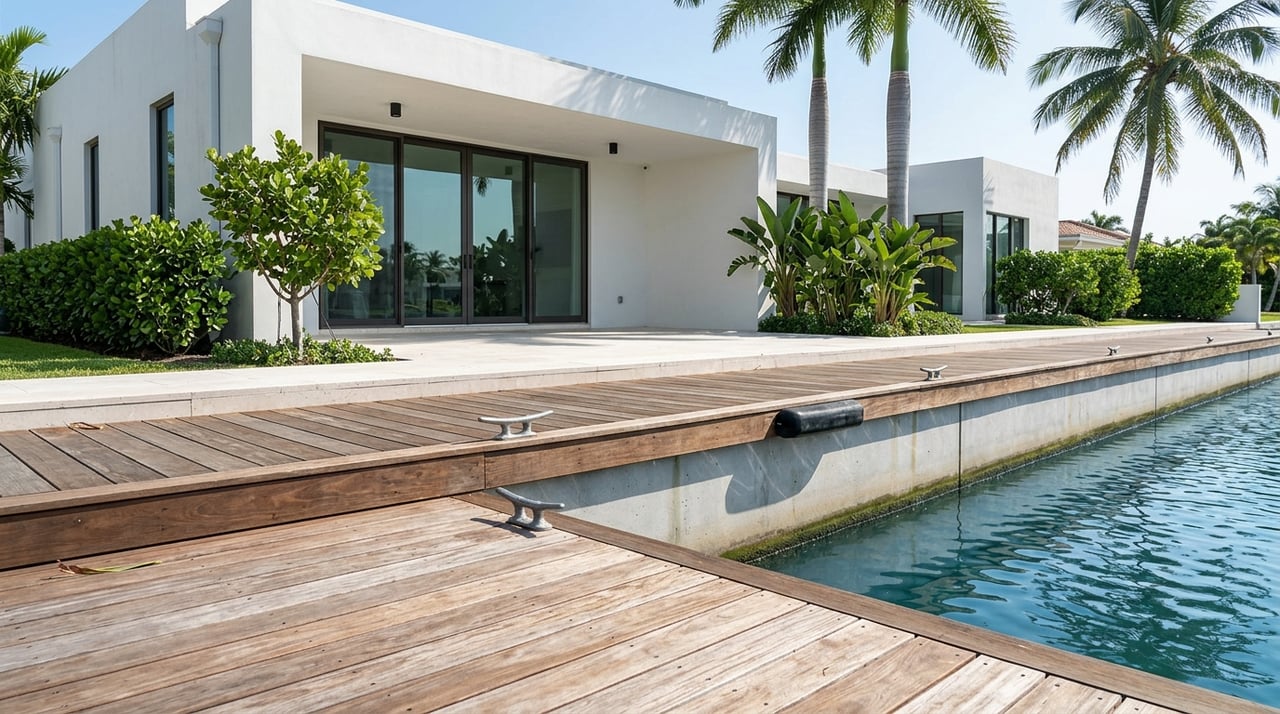
Recent city landmark reports identify some homes as Mediterranean Transitional. These properties may feature smooth stucco, low-pitched or shallow hipped tile roofs, geometric massing, recessed windows, minimal decoration, and more modern entry or window treatments, according to a city landmark report.
For you, that usually means a cleaner, more restrained look. These homes still borrow from the original Coral Gables vocabulary, but they express it with simpler lines and less ornament.
Why this matters for today’s buyers
If you prefer historic character but want a lighter or less ornate aesthetic, transitional homes can offer a middle ground. They may feel more aligned with current tastes while still fitting naturally into Coral Gables’ architectural identity.
This is also a reminder that Coral Gables values compatibility, not sameness. The city’s architecture has evolved over time, but it continues to relate back to the original design language.
How these homes are designed for living
A major reason Coral Gables architecture remains appealing is that many of its defining features are practical for South Florida. The city’s landmarks often emphasize porches, courtyards, loggias, fountains, gardens, and shaded circulation, as described on the city’s historical landmarks page.
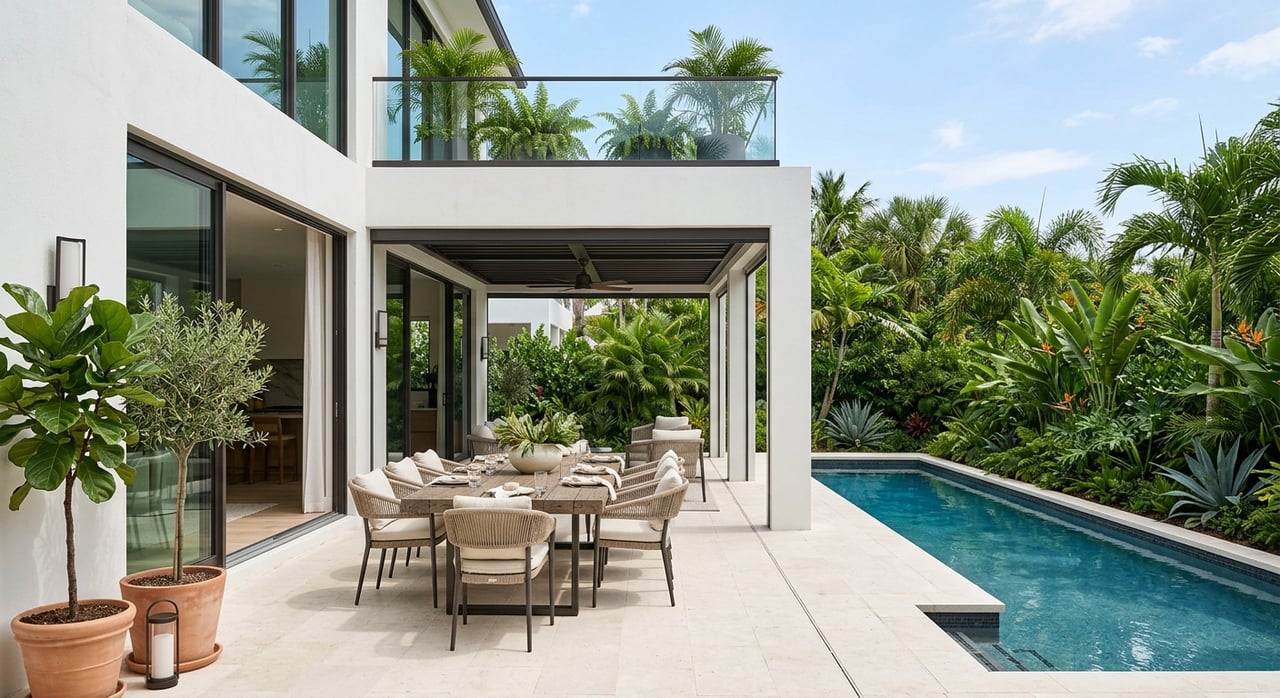
That gives many homes a strong indoor-outdoor relationship without relying on expansive glass walls. Instead, the emphasis is often on shade, texture, and layered outdoor spaces.
Lifestyle meaning behind the style
If you are choosing between homes, this design approach can shape daily living more than you might expect. A loggia or courtyard can create privacy and usable outdoor space. Deep overhangs and covered porches can make the home feel cooler and more connected to the landscape.
So when people talk about Coral Gables architecture, they are not only talking about appearance. They are also talking about how the home supports outdoor living, comfort, and a sense of place.
What owners should know about updates
If you own or plan to buy an older or historically significant home, renovation rules matter. Coral Gables’ preservation guide explains that exterior work requiring a permit is reviewed through Historic Preservation.
Some minor work, such as re-roofing, painting, or repairs in kind, may be handled administratively. Additions, demolition, and major exterior remodeling typically go to the Historic Preservation Board.
Can you modernize without losing character?
In many cases, yes. Coral Gables generally follows a compatibility model rather than a strict freeze.
The city’s guidance emphasizes preserving distinctive features, repairing deteriorated elements rather than replacing them when possible, and designing additions so they are compatible with the original structure. It also recommends placing additions on secondary elevations when feasible and differentiating new work from old while keeping the overall design cohesive.
What maintenance tends to matter most
Owners of architecturally significant homes should pay close attention to original materials and details. The preservation guide specifically warns against harsh treatments like sandblasting on historic materials.
That means maintenance is not only about appearance. It is also about protecting the materials and details that give the home its architectural value.
Preservation and long-term value
Architecture and value are closely connected in Coral Gables. The city states in its preservation guide that historic preservation helps strengthen the economy by stabilizing and enhancing property values in historic areas.
The same guide notes that designated properties may be eligible for tax incentives on approved improvements, and that local historic designation does not automatically raise assessed taxes. For many buyers and owners, that helps reframe preservation as an asset rather than a limitation.
Why style holds value here
Coral Gables has a long-established preservation structure. The city adopted its first historic-preservation ordinance in 1973, and the preservation guide notes that more than 200 properties are listed on the local historic register.
That long-term commitment helps explain why architecture matters so much in the local market. In Coral Gables, style, planning, and value are deeply linked.
Coral Gables is broader than one look
Mediterranean and Spanish-influenced architecture may define the city’s core identity, but Coral Gables is not limited to one visual language. The city also planned themed historic villages, including Dutch South African, Chinese, French Normandy, Florida Pioneer/Colonial, French Country, French City, and Italian, as shown on the city’s historic villages page.
That matters because it adds nuance to how you read the city. While Mediterranean architecture remains central, Coral Gables also includes intentional variety that reflects its broader planning history.
Final thoughts on reading Coral Gables architecture
When you understand Coral Gables architecture styles, you start to see more than stucco walls and tile roofs. You see a planned city, a set of design standards, and a local market where architecture plays a real role in daily living, renovation decisions, and long-term value.
If you are buying or selling a distinctive South Florida home, context matters. Working with an advisor who understands how design, presentation, and market positioning come together can make a real difference. If you are exploring your next move in South Florida, connect with Jamie Moody for thoughtful, personalized guidance.
FAQs
Is Old Spanish the same as Mediterranean Revival in Coral Gables?
- In Coral Gables, Old Spanish is usually best understood as a local shorthand for the more rustic, residential side of the broader Mediterranean or Spanish-influenced style family, rather than a separate formal city category.
Can you renovate a historic Coral Gables home and still keep its character?
- Yes. Coral Gables generally uses a compatibility approach, which means updates are typically reviewed based on how well they fit the home’s original scale, materials, and proportions.
Does historic designation in Coral Gables make renovations impossible?
- No. The city allows changes, but the review process depends on the scope of work, with minor work often handled administratively and major exterior changes reviewed more closely.
Why do some Coral Gables homes feel grand while others feel more relaxed?
- Homes in the same Mediterranean-Spanish family can express the style differently, with some emphasizing formal symmetry and landmark-style details while others focus on porches, courtyards, texture, and a more domestic feel.
Are contemporary homes still true to Coral Gables architecture?
- Often, yes. Many newer or transitional homes keep key Mediterranean elements like stucco, tile, and proportion while simplifying ornament and using cleaner lines.
Why is architecture such a big part of Coral Gables home values?
- The city ties design, preservation, and planning closely together, and its preservation framework is intended to help stabilize and enhance property values in historic areas.